



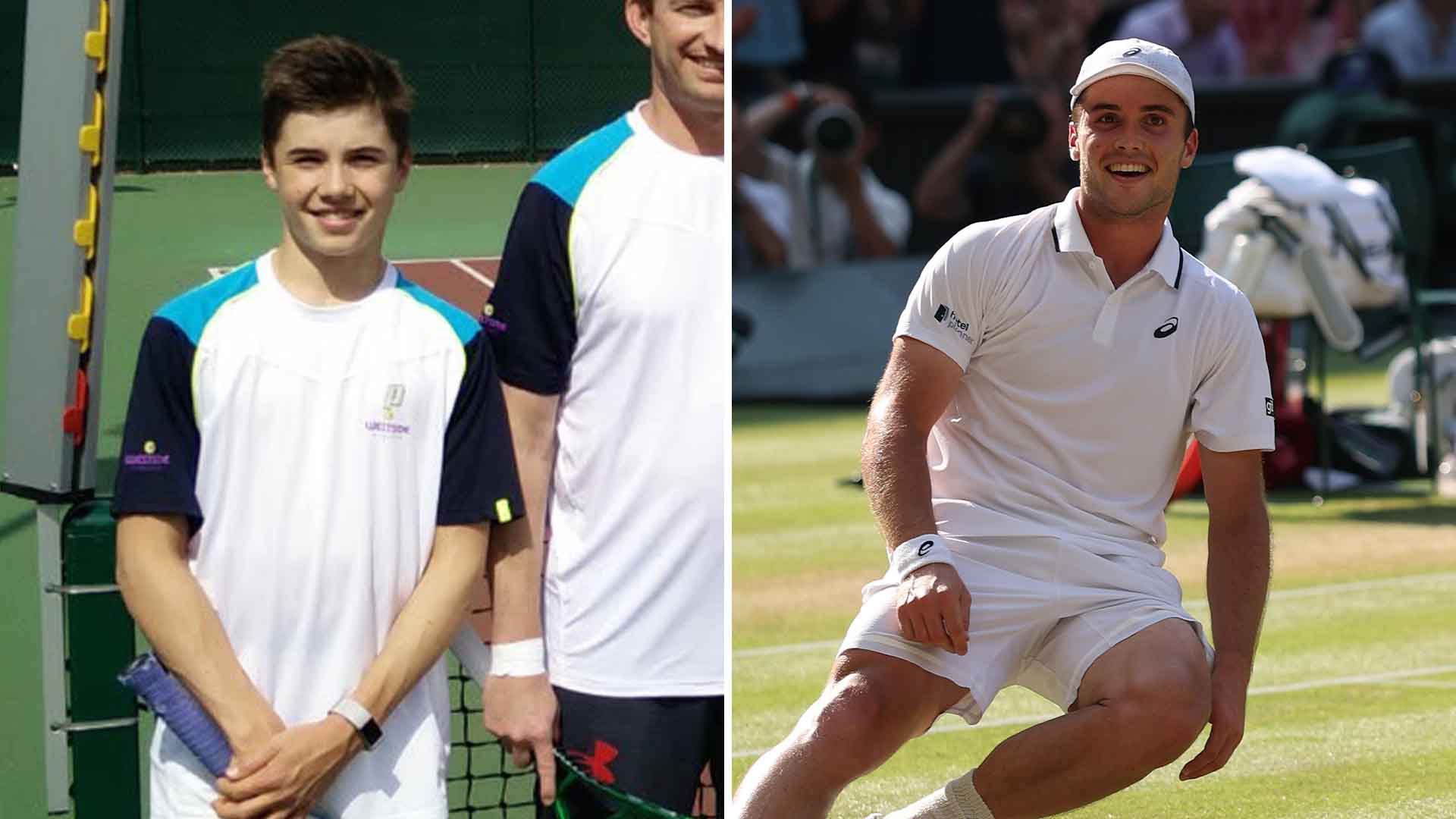
It is not only Arthur Fery himself, but his confidence, that has become one of the stories of Wimbledon.
In press conferences throughout his breakthrough fortnight, the British wild card has spoken matter-of-factly about believing he belongs on one of tennis’ biggest stages. For those who coached him as a child, however, none of it has come as a surprise.
Tinus Nortje, who worked with Fery between the ages of seven and 14 at Westside Lawn Tennis Club — which is just a stone’s throw away from the All England Club — says the confidence visible today was already apparent long before his striking run to the semi-finals at the grass-court major.
“Arthur has always been backing himself. He never shied away from a challenge,” Nortje told ATPTour.com. “Arthur was actually quite quiet. He wasn’t a loud character, but he was absolutely driven. Everything had to have a goal at the end of it. You could see how much he loved the sport, but he was also incredibly self-aware about what he wanted to achieve. He was very driven.”
With that mentality, Fery has embarked on a Wimbledon fortnight that is likely to reshape his career, having already secured British No. 1 status on Monday when the rankings update. The 23-year-old is currently up 78 spots to No. 36 in the PIF ATP Live Rankings.
Yet for Nortje, the qualities that have allowed Fery to embrace the occasion at Wimbledon were visible long before he was competing on Centre Court. During his formative years at Westside, Fery was surrounded by other talented young players, but his approach stood out.
“He was in a group of four boys who were all very similar, but the difference with Arthur was how selective and thorough he was,” Nortje said. “He’d come to every session with a very clear idea of what he wanted to work on. We never had to tell him what intensity to bring — he just brought it. There was a calm determination about him that was fascinating at that age.”
That determination has been on full display throughout Fery’s Wimbledon run. The 23-year-old has combined impressive athleticism with a versatile all-court game, using his speed, anticipation and timing to frustrate opponents who often possess greater physical dimensions.
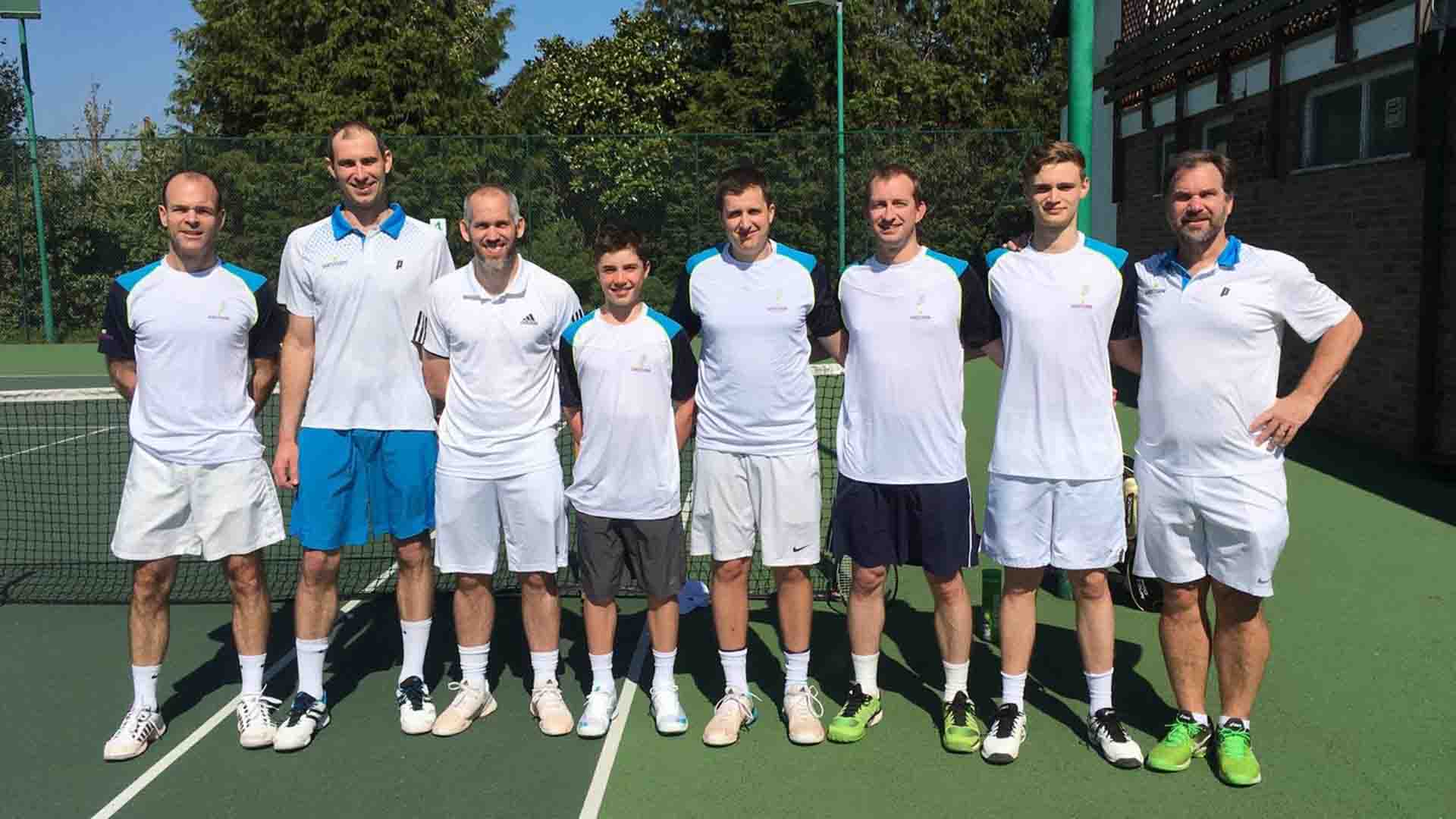 A young Arthur Fery (fourth from left) competes at Westside Lawn Tennis Club. Photo: Westside Lawn Tennis Club.
At 5’9”, Fery has never relied on overpowering opponents. Instead, his game has been built around movement, court intelligence and exceptional hand skills — qualities that have drawn comparisons with former World No. 4 Kei Nishikori. But throughout his development, there has also been an understanding that improving his physicality would be crucial to competing at the highest level.
“From about the age of nine, you could already see the hunger and desire,” Nortje said. “He was often told he was too skinny and too short. Instead of discouraging him, it almost made him think, ‘OK, I’ll show you.’”
As he moved beyond his years at Westside and began to separate himself from many of his peers, Fery looked for the next environment that could challenge him. That led him to Stanford University, where he played college tennis from 2020 to 2023 and continued to develop both physically and mentally.
The college system provided the kind of daily competition and pressure that prepared him for the demands of professional tennis. Against some of the best collegiate players in the United States, Fery learned how to handle constant competition, travel and the grind of performing week after week.
“I think playing a lot of matches there day in, day out and having to grind down is what sets him apart at the moment,” Nortje said. “His trajectory has been very steady, but just going completely up and up. He’s built up this resilience. You could see that from an early age. Very clear mindset. But then he’s gone out and put in the hard yards.”
Those hard yards have been evident during his Wimbledon run. Whether battling through pressure-filled moments or stepping onto Centre Court against established stars, such as his quarter-final victim and World No. 10 Flavio Cobolli, Fery has carried himself with the composure of a player who feels he belongs.
“He was always backing himself,” Nortje said. “You’d give him something to work on and he wouldn’t stop until he was satisfied that he’d got it right. The work ethic and discipline are really good. The most obvious change is his physical strength. He’s unbelievably strong now. But the mindset was already there when he was young. Now it’s backed up by the conviction that comes from years of hard work.”
 Arthur Fery won the men's singles Club Championships at Westside in 2017, when he was 15 years old. Photo: Westside Lawn Tennis Club.
Fery won the men’s singles title at the Westside Club Championships in 2017 at just 15 years old, joining a list of champions that also includes Nick Adams, who regularly partnered with Fery and tested him during practice sets as a junior. Adams, who saw the youngster’s development up close, believes the qualities now on display at Wimbledon were already clear long before the spotlight arrived.
“Very early on, he learned the benefit of having a good set of hands,” Adams said. “His touch around the net, his volleys, his ability to slice as well as come over the ball with topspin — he had that variation from a very early age.
“His backhand was a very strong shot early, and I’d say that’s a world-class shot now. He had a very solid technical grounding, which allowed him to then build his physique around that into the best player he could possibly be.”
While Fery’s Wimbledon run has been defined by his belief in himself, Adams says that confidence was built alongside a strong work ethic and a grounded approach away from the court.
“His self-belief was very clear from the start,” Adams said. “I’m not sure he quite knew or understood the journey at 13, 14 or 15, but he was putting himself in a position where he had a chance to progress into the player he is today. He always had a very strong work ethic, but he was quite understated as a teenager as he built his path. He just worked incredibly hard.”
On Friday, Fery will face World No. 3 Alexander Zverev with a place in the Wimbledon final at stake. Whatever happens next, his remarkable fortnight has confirmed what those around him have believed for years: the confidence he displays on the biggest stages was never accidental.
“You could see there was something different when he was little,” Nortje said. “Now he believes in himself with real conviction. You can see that on Centre Court.”




© Copyright 1994 - 2026 ATP Tour, Inc. All Rights Reserved. No part of this site may be reproduced, stored in a retrieval system or transmitted in any way or by any means (including photocopying, recording or storing it in any medium by electronic means), without the written permission of ATP Tour, Inc.. Terms & Conditions | Privacy | Community Social Media Policy | Modern Slavery Statement | Feedback | Cookies | Your Privacy Choices 


